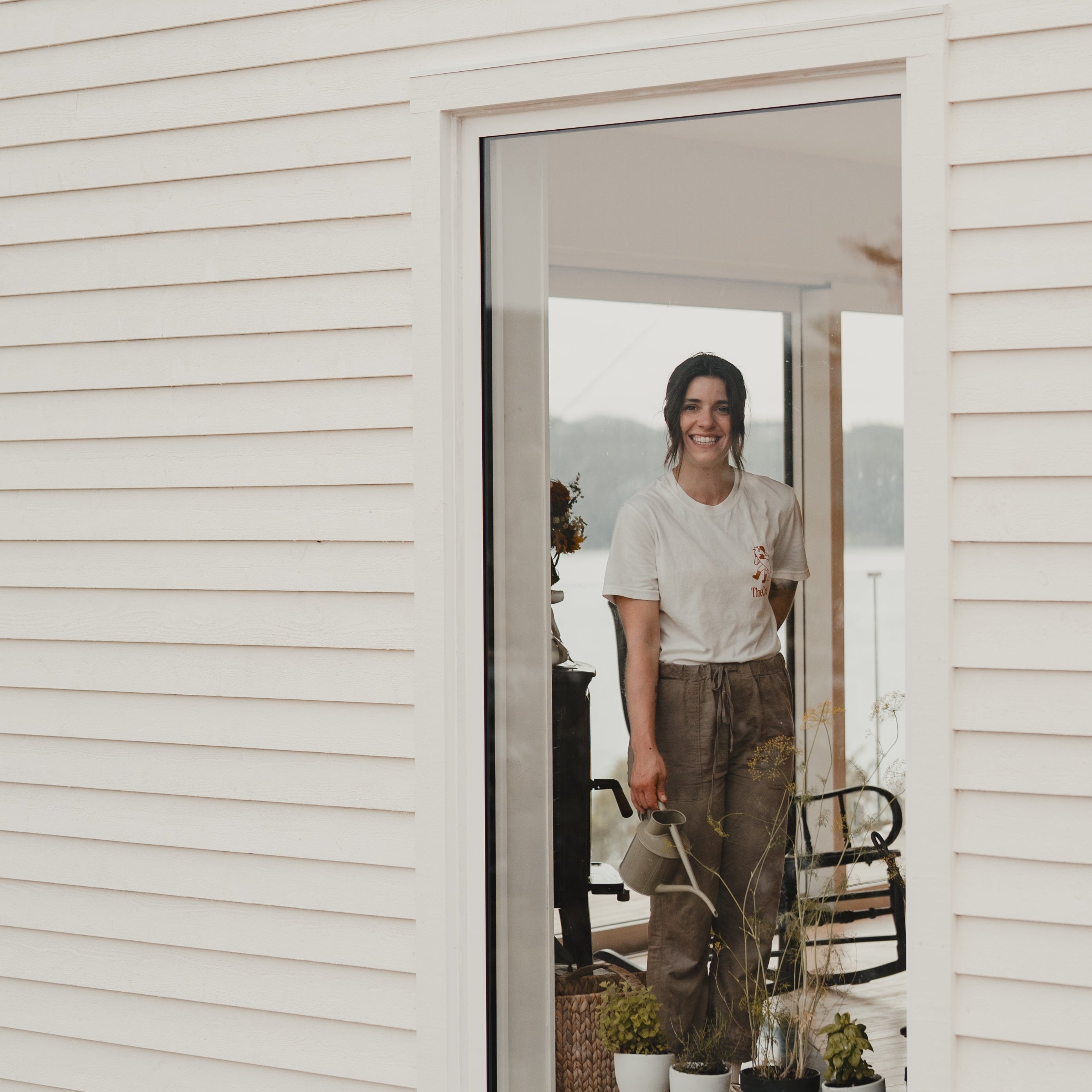
At The Cape, hospitality begins with place. Newly opened and set against Newfoundland's rugged coastline, the retreat invites guests to experience the land through food, craft, and quiet moments of connection. We spoke with chef and host Alex Blagdon about building an experience rooted in community, seasonality, and the stories that shape how we gather.

The Cape retreat in Newfoundland. Image by Erik McLean.
The Cape feels deeply rooted in place; less a destination, more a way of experiencing Newfoundland. How did it become something so grounded in land, culture, and story?
Alex: I'm someone who not only hosts travellers, but is also a traveller myself. When I explore both our province and other parts of the world, I always appreciate hosts who are passionate about their story: where they come from, their community support system, and how they came to be. As a host of the experiences within The Cape, I believe I have a responsibility to both Newfoundland and the visitor to give them something to leave with - a small part of what makes this place so rich in culture.
We waste because it's easy, not because we have to.
You often frame nature not as a backdrop, but as something guests engage with: something they taste, feel, and live. How does this reshape what hospitality can be?
Alex: This isn't just my story to share, but the story of those who farm our lands, fish our seas, and raise our livestock. As a chef in hospitality, we have a unique opportunity to share where our food comes from with those dining at our table. Sometimes guests forage for the ingredients themselves or meet the providers who shape our menus.

Haws Fazeley Flow in Lichen. Image by Braeden King.
Food sits at the center of The Cape, in a way that feels intuitive. Why did land-to-table become the retreat's core language?
Alex: Growing up in Newfoundland, I learned from my community that our culinary identity was born from survival. They preserved food for centuries without refrigeration by hunting, fishing, and foraging from the land, and by bottling or salting as much as possible to get through the long winters. Although it's easy enough to go to the grocery store and buy everything you need, there's still a large portion of the population who take advantage of what our land has to offer, preserving our culture alongside it. Land-to-table wasn't a trend in Newfoundland; it's a pillar of our lifestyle worth protecting.
There's a strong sense of circularity in how you approach food, from foraging to preservation to minimizing waste. How does that philosophy shape the daily rhythm of the kitchen and guest experience?
Alex: I went to Ballymaloe culinary school on a farm in Ireland where we had no garbage. It showed me that we waste because it's easy, not because we have to — and that's a lesson I simply can't unlearn. This philosophy is reinforced when I spend time with those who tend the food we serve, the people who work endlessly to make these ingredients possible. It's evolved into an experience for guests where even if the food is great, the focus is the story paired with it — how we use the whole product, and those who inspire the dish.

Alex gathering her ingredients from the areas surrounding the retreat. Tools used: Niwaki Sentei Garden Scissors and Blue Steel Higonokami Folding Knife. Images by Braeden King.
Foraging is key to how people connect with the landscape. What does gathering from the land reveal about place, seasonality, and our relationship to nature?
Alex: Growing up, foraging meant berry picking with my grandmother and picking flowers. The activity always focused on something we had to do to have berries in the winter, rather than something we did just to fill the day. Living in the middle of the North Atlantic meant the season was always short, and we cherished the unpredictable seasons when they brought abundance. To this day, you'll always know the state of the berries come fall, because it's a conversation buzzing around every community. It taught us patience with nature and appreciation for its bounty. Some years there are few berries and scarce mushrooms; in others, there are too many to pick!
Land-to-table wasn't a trend in Newfoundland; it's a pillar of our lifestyle worth protecting.
The Cape exists at the intersection of regeneration — of land, community, and a slower way of living. What do you hope it contributes to how we think about travel, food, and place?
Alex: I love the idea of The Cape being a place to disconnect to reconnect — a place that cultivates conversation between strangers and curiosity about their location. As an adult, I find I leave such little space for curiosity because the world demands timelines. We aren't trying to fill our guests' days with back-to-back activities — quite the opposite. We hope they leave space to wander, internally and externally.

Inside the retreat house. By the hearth: Redecker Beechwood Handle Dustpan and Redecker Hand Broom. Images by Braeden King.
Discover more about The Cape and book your stay here.